


When it comes to employer-side FCRA compliance, the small nuances add up quickly. What seem like straightforward compliance parameters at a glance quickly become a complex regulatory web.
Consumer protection is important; in fact, it has been one of our biggest focuses for over 20 years. We are always working with our valued partners to help ensure the integrity of our screening solutions and the health of their workforces. Behind every background check is a real person seeking a livelihood, which is no small matter.
We have created a short list of three employer-side compliance best practices based on common questions we receive and concerns we see.
So, here they are.
1. Maintain a Standalone Disclosure and Ensure State-Specific Consent
Employment screening disclosures should be dynamic, not static. There are also various specifications regarding how disclosures must be presented. Here are some of the need-to-knows:
- The disclosure form must be a separate, standalone document. It is not to be included as part of an employment application, offer letter, non-compete, or other onboarding materials.
- Avoid exculpatory clauses in screening disclosures.
- Make sure state-specific disclosures are included when applicable. General consents will not cover all the bases.
How Peopletrail Helps
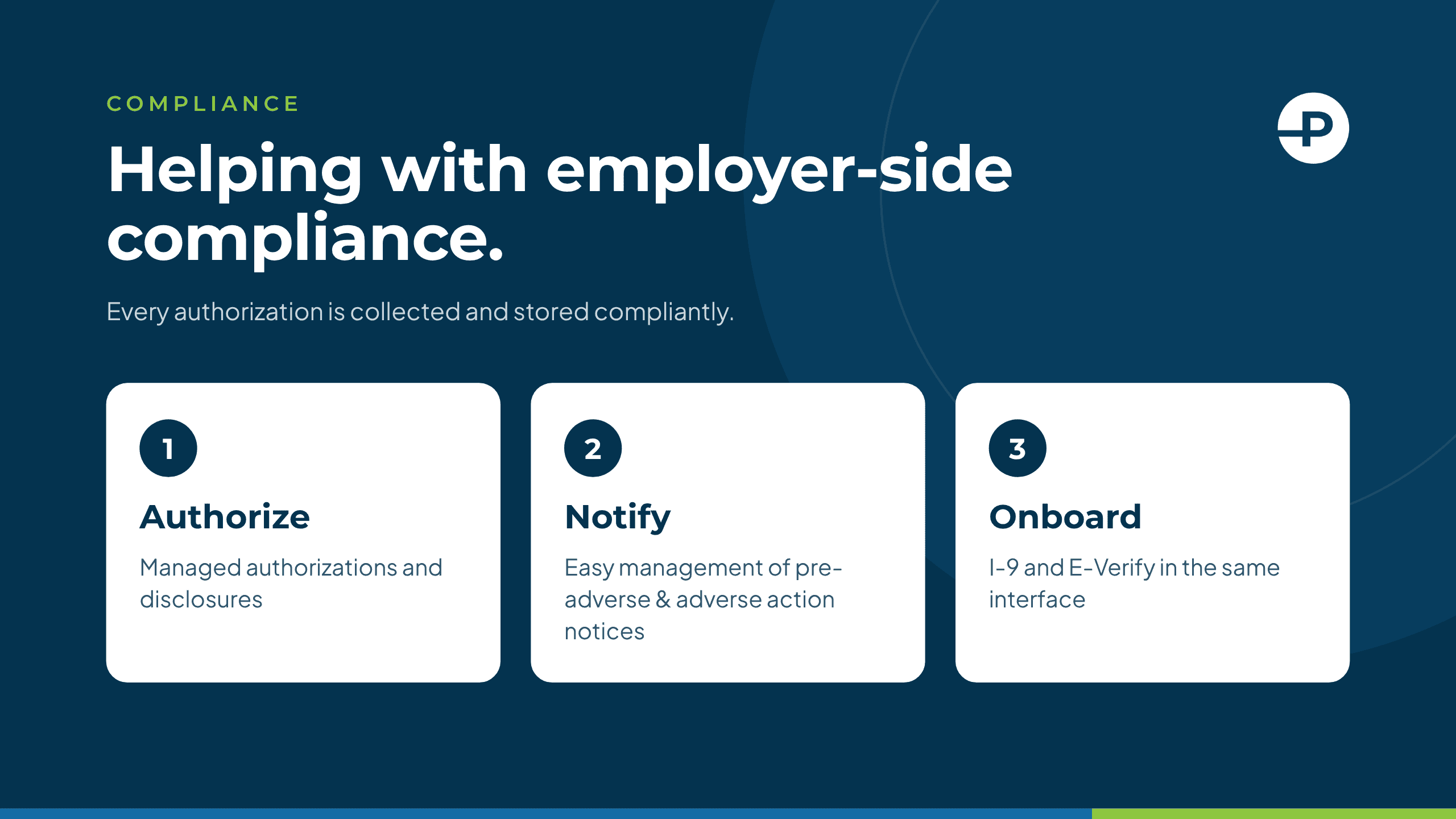
Our authorization process is simple, allowing hiring managers to initiate the process with a candidate name and email address. The candidate then receives a link and is guided through the process compliantly, with disclosures populating dynamically based on jurisdictional requirements. All message sets and disclosures can be customized to fit specific needs. Simple and compliant.

2. Electronically Verifying Candidate Identity During the Authorization Process
Employers place a lot of trust in the identifier information that candidates provide. However, that information is sometimes erroneous. Proper identity verification is crucial to ensuring the integrity of the data points used to screen an individual. Here’s what you should know:
- The personal identifiers a candidate provides can be mistaken or incorrect, and there isn’t always a reliable way to correct them without ID reconciliation.
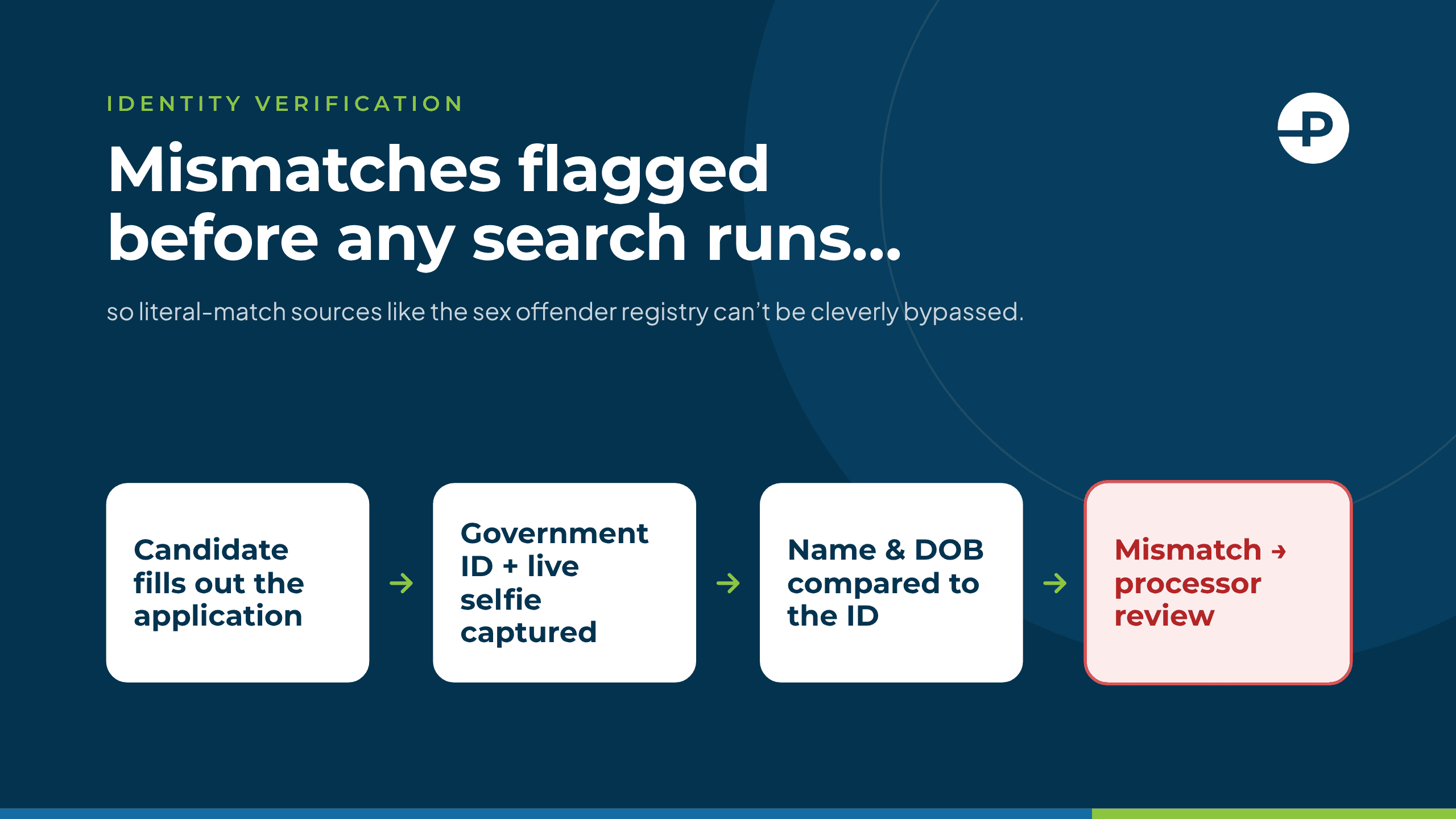
- Some data sources, such as the national sex offender registry, are exact-match, which means added or omitted letters in the name or a suffix (I, II, Jr., Sr., etc.) variation could result in bypassed records. While certain searches can mitigate these discrepancies, some individuals frequently log variations of their name on credit applications and elsewhere, making these errors seem valid alongside other screening data.
- Fake IDs are becoming increasingly common, and this can account for an individual’s entire personal profile (name, DOB, SSN, photo ID, etc.).
How Peopletrail Helps
Peopletrail offers an identity verification product that integrates seamlessly into the candidate authorization portion of the process. This process captures a photo of the candidate as well as a photo of the front and back of a government-issued ID, using biometrics to reconcile the candidate to their ID and ensure the information provided on their background matches. This process is seamless and straightforward for the candidate and makes a meaningful difference when it comes to compliance.
3. Rigid Consistency In Screening Practices and Adverse Action Decision-Making
Consistent screening protocols are not just about efficiency; they are also a matter of compliance. Here are some best-practice recommendations:
- We strongly recommend that each position (or employee level/tier) have its own defined screening scope and parameters, with no candidate-by-candidate variability.
- It is likewise a best practice for disqualification (offer rescission) parameters to be clearly defined and used consistently across position types.
- Because of certain state and jurisdictional requirements, we suggest allowing the candidate at least 10 days, rather than the federally recommended 5 days, before issuing an Adverse Action notice.
How Peopletrail Helps
Peopletrail assists employers in all of these areas, working to ensure compliance on all fronts.
Summary
Both the CRA and the employer have their responsibilities under the FCRA. However, we consider it a duty to help our partners out wherever we can. For this reason, we have created processes and solutions to ease the burden on employers. Our technologies are built and implemented with accuracy, security, and compliance in mind.
If you have questions about how Peopletrail helps organizations stay compliant throughout the entire screening process, please reach out to our team.